
An oxymoron is a figure of speech where two contradictory words are placed together to create a powerful meaning. At first glance, these words may seem opposite, but when combined, they deliver a deeper message that captures attention. Writers often use oxymoron to make their language more expressive, emotional, and memorable.
In literature and poetry, oxymoron play an important role in highlighting contrasts and emotions that cannot be expressed with plain words. They are also common in everyday language, making conversations more colorful and engaging. From romantic poetry to modern-day communication, oxymoron add a unique charm.
Some popular examples include “bittersweet,” “deafening silence,” and “sweet sorrow.” These phrases instantly make the reader pause and think, which is why oxymoron remain a timeless tool for writers, poets, and speakers.
Also Check: The Power of Idioms in Storytelling
Oxymoron: The Beauty of Contradictory Words
An oxymoron is a figure of speech where two opposite or contradictory words are placed side by side to create a new, meaningful expression. While the words seem to cancel each other out, together they bring a fresh perspective that sparks curiosity. This makes oxymoron both contradictory yet meaningful, which is why they are loved in writing and everyday speech.
Writers and poets often use oxymoron to evoke emotions, create drama, or highlight a hidden truth. For example, phrases like “living dead” or “silent scream” make readers pause and think more deeply. Such combinations add depth and creativity to language, making it more engaging and memorable.
To better understand, here are quick examples of contradictory words used as oxymoron:
- Bittersweet – a mix of happiness and sadness
- Deafening silence – silence so strong it feels loud
- Sweet sorrow – sadness with a touch of beauty
Through these examples, it becomes clear how an oxymoron adds beauty, emotion, and richness to any form of writing.
The Power and Purpose of Oxymoron in Writing
An oxymoron holds a unique power in writing because it blends two opposite ideas, creating a phrase that instantly grabs attention. Writers and poets often use oxymoron to express complex emotions or situations that cannot be explained in simple words. By joining contradictions like “bittersweet” or “deafening silence,” literature gains depth and becomes more memorable and thought-provoking.
In poetry and speeches, oxymoron highlight tension, irony, or dual meanings, making the audience pause and reflect. This technique not only adds rhythm and creativity but also strengthens the emotional impact of the message. Great speakers use oxymorons to make their words stick in the mind of listeners.
The true purpose of an oxymoron lies in its creativity in expression. It challenges readers to think beyond the obvious and appreciate the beauty of contradictions in life and language. Whether in storytelling, persuasive writing, or everyday communication, oxymoron keep the language fresh, engaging, and filled with imaginative power.
Famous Examples of Oxymoron in Literature and Everyday Life
An oxymoron adds charm and depth to writing by joining two contradictory words to create a powerful meaning. Writers from Shakespeare to modern storytellers have used oxymoron to make their language richer and more memorable. These clever word pairs not only capture attention but also reflect the complexity of human emotions.
Classic Literary Examples
In literature, oxymoron have always played a key role. William Shakespeare used phrases like “parting is such sweet sorrow” in Romeo and Juliet, perfectly blending joy and pain. Poets and novelists also created famous lines such as “painful pleasure” or “wise fool” to show the duality of life. These expressions highlight how oxymoron make readers stop, think, and feel.
Modern and Everyday Usage
In today’s world, oxymoron are common in pop culture, movies, and daily conversations. Popular phrases like “seriously funny,” “living dead,” or “deafening silence” are easy to recognize. Even movies and songs often play with oxymoron to sound catchy and meaningful.
Quick Examples Table:
| Category | Famous Oxymoron |
|---|---|
| Literature | Sweet sorrow, Wise fool |
| Pop Culture | Pretty ugly, Alone together |
| Everyday Life | Living dead, Seriously funny |
Oxymoron show that contradictions can be beautiful, expressive, and relatable in every form of communication.
How Writers Use Oxymoron to Enhance Style
Writers often use an oxymoron to add style, depth, and creativity to their work. By combining two opposite words, they create a powerful effect that captures the reader’s attention. Whether in poetry, storytelling, or advertising, oxymoron make language more memorable and meaningful. They allow writers to show irony, humor, or even emotional contrast in just a few words.
You can also try our Free Online Figurative Language Checker Tool.
One of the key benefits of using an oxymoron in writing is the ability to express complex ideas in simple terms. Instead of long explanations, writers can use a short phrase like “deafening silence” or “bittersweet memory” to convey strong emotions. This makes the text easier to understand while leaving a lasting impact.
Some popular examples of oxymoron used in literature and everyday writing include:
- Cruel kindness – shows mixed emotions
- Living dead – common in storytelling and movies
- Seriously funny – often used in humor
- Awfully good – popular in casual speech
By using oxymoron, writers can engage readers emotionally, highlight contrasts, and make ideas more powerful.
Benefits of Using Oxymoron in Communication
An oxymoron is more than just a clever play on words—it brings contrast, surprise, and depth to communication. By placing two opposite ideas together, writers and speakers create a fresh perspective that instantly captures attention. This makes the language not only engaging but also thought-provoking, encouraging readers to reflect on the deeper meaning behind the words.
The benefits of oxymoron in communication go beyond style. They make expressions memorable and persuasive, which is why they are widely used in speeches, advertising, and storytelling. A phrase like “sweet sorrow” or “pretty ugly” stays in the mind much longer than a plain description. This helps writers connect emotionally with their audience in a simple yet powerful way.
Some key advantages include:
- Engages readers through contrast and surprise
- Adds rhetorical beauty to writing and speech
- Makes ideas more persuasive and memorable
- Creates emotional impact with fewer words
By using oxymoron, communication becomes aesthetic, impactful, and easier to relate to, making it a timeless tool in writing and speech.
Commonly Misunderstood vs. True Oxymoron
Many people often confuse an oxymoron with a paradox or a simple contradiction. While all three involve opposite ideas, their usage is different. An oxymoron is a short phrase that combines two contradictory words, like “deafening silence.” A paradox is a full statement that seems impossible but reveals a hidden truth, while a contradiction directly opposes itself without meaning.
Sometimes, words are mistakenly labeled as oxymoron. For example, calling “less is more” an oxymoron is incorrect—it is actually a paradox. Similarly, saying “black and white” is not an oxymoron because it simply lists opposites without combining them in one idea. Understanding this difference makes writing clearer and more powerful.
To identify a true oxymoron, follow these tips:
- Look for two opposite words placed together (e.g., bittersweet).
- Check if the phrase creates a new, deeper meaning beyond the contradiction.
- Make sure it’s not just a paradoxical statement or unrelated contrast.
By recognizing this distinction, writers can use oxymoron effectively to add depth, creativity, and impact to their content.
How to Create Effective Oxymoron (Practical Guide)
Creating an oxymoron in writing is a simple yet powerful way to add depth and creativity. Writers often use this figure of speech to surprise readers with contradictory words that still make sense together. The secret lies in balancing clarity and impact, so the phrase sounds natural while leaving a lasting impression.
To craft an oxymoron, the first step is to choose the right pair of words. One should carry a positive meaning, while the other should create contrast. For example, phrases like “silent scream” or “sweet sorrow” instantly capture attention.
Here are simple steps to create effective oxymoron:
- Select contradictory words that naturally fit together.
- Keep the phrase short and easy to understand.
- Focus on clarity, so the reader doesn’t get confused.
- Aim for emotional impact, making the phrase memorable.
When done correctly, oxymoron turn ordinary writing into something engaging, expressive, and thought-provoking.
Why Oxymoron Will Always Stay Relevant
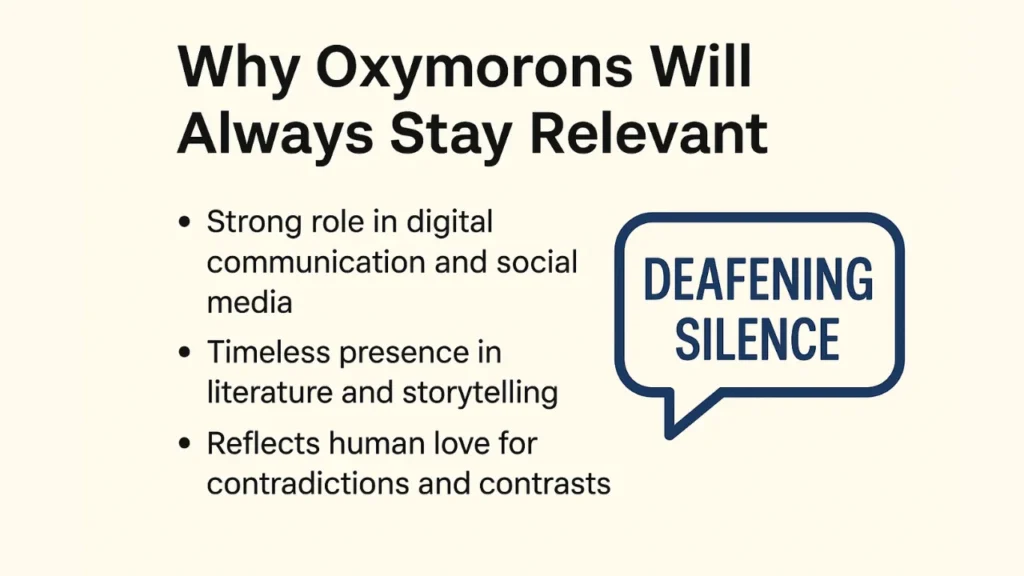
An oxymoron has a special place in language because it combines two opposite ideas, creating a unique impact. In modern writing and digital media, oxymoron are often used to grab attention, spark curiosity, and make content more memorable. Whether it’s in blogs, social posts, or advertisements, this literary tool continues to be powerful for communication.
In literature, oxymoron have stood the test of time. From Shakespeare’s plays to today’s novels, writers have used them to express complex emotions in a simple way. Their timelessness proves that readers connect deeply with contradictions because they reflect real human experiences.
The love for contrasts is part of human nature. People are naturally drawn to paradoxes like “sweet sorrow” or “deafening silence” because they mirror life’s dualities. This emotional connection ensures that oxymoron will never lose relevance in both creative writing and everyday conversations.
Key Points on Relevance of Oxymoron:
- Strong role in digital communication and social media.
- Timeless presence in literature and storytelling.
- Reflects human love for contradictions and contrasts.
Conclusion: The Beauty of Oxymoron in Language
An Oxymoron is more than just a play on words; it is a creative tool that gives writing depth, contrast, and beauty. By combining opposite ideas, oxymoron capture emotions that are hard to explain in plain language. They make ordinary sentences feel memorable, thought-provoking, and poetic, leaving a lasting impression on the reader.
In communication, oxymoron encourage curiosity and reflection. Writers, poets, and even speakers use them to spark imagination and add charm to their expression. This shows how oxymoron are not just figures of speech, but also bridges of creativity and understanding.
As a final thought, one may say language is a “bittersweet harmony.” This closing oxymoron reminds us that words can carry both contrast and connection, making writing truly powerful and timeless.